Aviation Jun 3, 2026
RotorTech 2026 and AAM Summit Highlight Workforce and Training as Critical Enablers for Growth
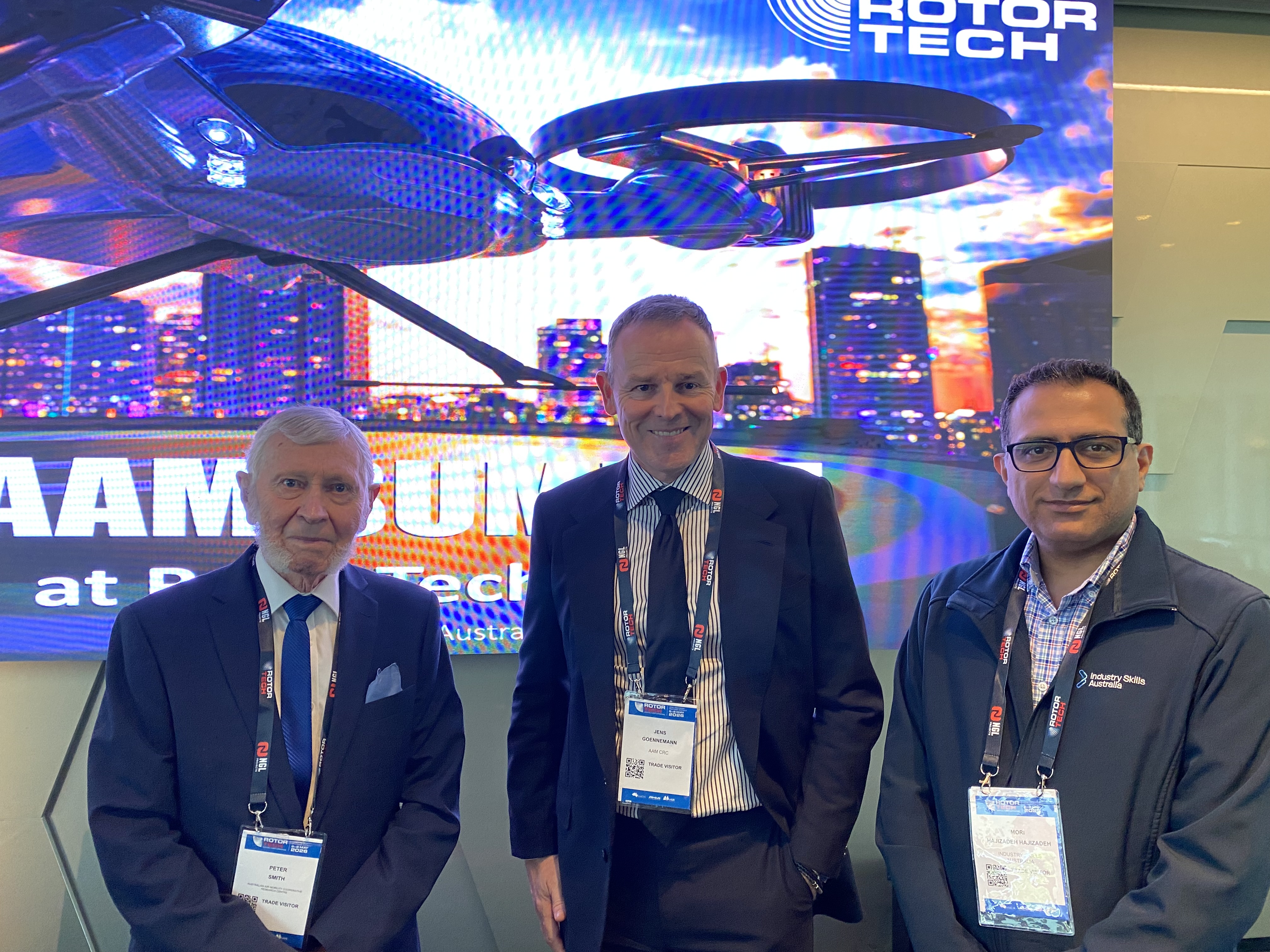
RotorTech 2026 and the Advanced Air Mobility (AAM) Summit brought together leaders from the rotary-wing, uncrewed, and AAM sectors to explore emerging developments, shared challenges, and opportunities shaping the future of aviation. A key outcome of the event was the strong alignment across industry, government, and training providers on the priorities required to enable sustainable sector growth.
Mori Hajizadeh, Aviation Industry Engagement Manager, attended the conference and engaged with stakeholders across the ecosystem. Bringing together the rotary, uncrewed, and AAM sectors highlighted just how important collaboration is. Attending RotorTech and the AAM Summit ensures we stay connected to industry priorities and can help shape the workforce and training systems needed for future growth.
Several critical themes emerged from these discussions:
Workforce to Define the Pace of Industry Growth
Workforce capability was consistently identified as a defining factor for the sector’s future. The industry is already facing skills shortages, particularly among helicopter Licensed Aircraft Maintenance Engineers (LAMEs), with regional areas experiencing the greatest impact. At the same time, the gradual retirement of experienced personnel is accelerating the loss of critical expertise.
Addressing these challenges will require a coordinated effort to build a sustainable talent pipeline. This includes earlier engagement with schools, clearer and more accessible career pathways, and a unified industry voice to attract new entrants. As aviation technologies evolve, so too does the nature of work. Increasing levels of autonomy are shifting roles toward supervision, systems oversight, and assurance rather than direct manual operation.
This shift reinforces a key insight: workforce capability must be treated as foundational infrastructure for AAM, rather than a secondary consideration.
Training Systems Must Evolve with Technology
Traditional aviation training models are increasingly seen as insufficient to meet the scale and pace of industry change. There is growing momentum toward blended training approaches that incorporate simulation, extended reality (XR), and adaptive learning technologies to improve accessibility, flexibility, and efficiency.
Despite these advancements, stakeholders emphasised that practical, real-world experience remains essential to ensuring safety and competence. Future training systems will need to strike the right balance between simulation and hands-on learning.
Emerging models are expected to be competency-based, modular, and closely aligned with regulatory requirements. Strengthening end to end training pathways through early engagement with school students, from entry level roles to advanced technical positions, will be essential to support both skills development and operational readiness.
Infrastructure Progressing, but Constraints Remain
Infrastructure development continues to be a key enabler for AAM but also presents significant challenges. Vertiports and vertipads remain central to enabling operations, with barriers including cost, safety requirements, and integration within complex urban environments.
Encouragingly, new approaches are emerging, including modular and scalable infrastructure solutions designed to improve feasibility and adaptability. More broadly, development is shifting toward integrated aviation ecosystems and precincts that bring together testing, manufacturing, training, and operational capabilities.
In addition to physical infrastructure, digital systems, including airspace management, energy integration, and data-driven operations, are becoming increasingly important components of the overall ecosystem.
Regulation Advancing, with Further Clarity Needed
Regulatory frameworks for AAM continue to evolve, providing a clearer foundation for industry development. However, key areas, particularly operating frameworks and autonomy, remain in development and will require ongoing consultation between regulators and industry. Successful integration of AAM will depend on scalable airspace management systems, well-defined certification pathways, and strong alignment with international standards.
A Coordinated Path Forward
The successful rollout of AAM will rely on coordinated action across industry, government, and the skills ecosystem. Collaboration will be essential to addressing workforce challenges, modernising training systems, and aligning infrastructure and regulatory development.
Industry Skills Australia (ISA) will continue to work with partners across aviation and emerging technology sectors to support workforce development, drive training innovation, and strengthen industry alignment, helping to ensure Australia is well-positioned for the next era of aviation.