Aviation Mar 26, 2026
RPAS in Australian Skies 2026 conference - Preparing the Workforce and Regulations for Remotely Piloted Aircraft Systems (RPAS)
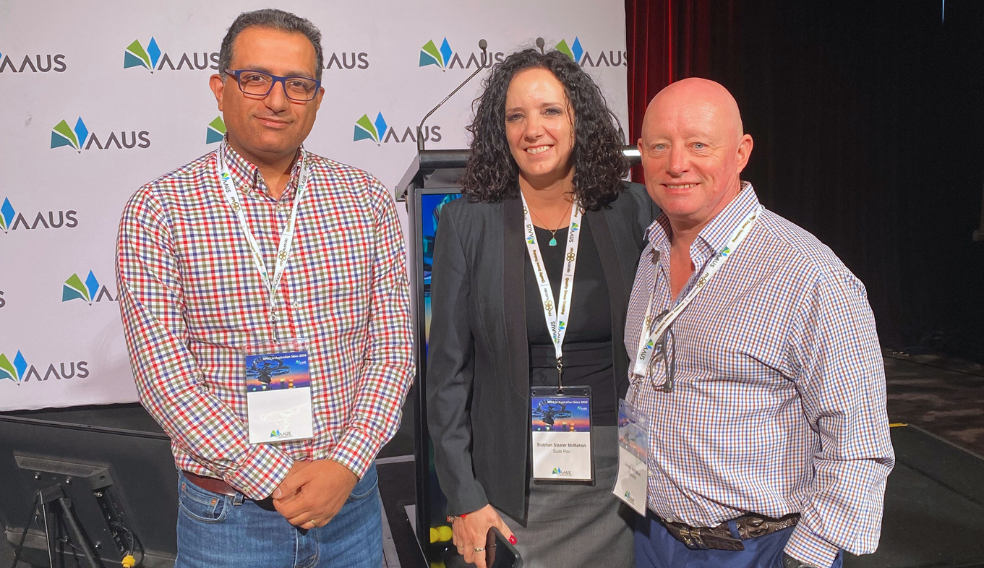
What does it take to safely unlock a sky filled with drones? Australia is gearing up for a future where uncrewed aviation is mainstream, scalable, and deeply integrated across our economy.
Our Aviation Industry Engagement Manager, Mori Hajizadeh, had the opportunity to attend the RPAS in Australian Skies 2026 conference hosted by the Australian Association of Uncrewed Systems (AAUS). Discussions extended well beyond technology, focusing on ecosystem design, regulations, workforce capability, and building public trust to enable sector growth.
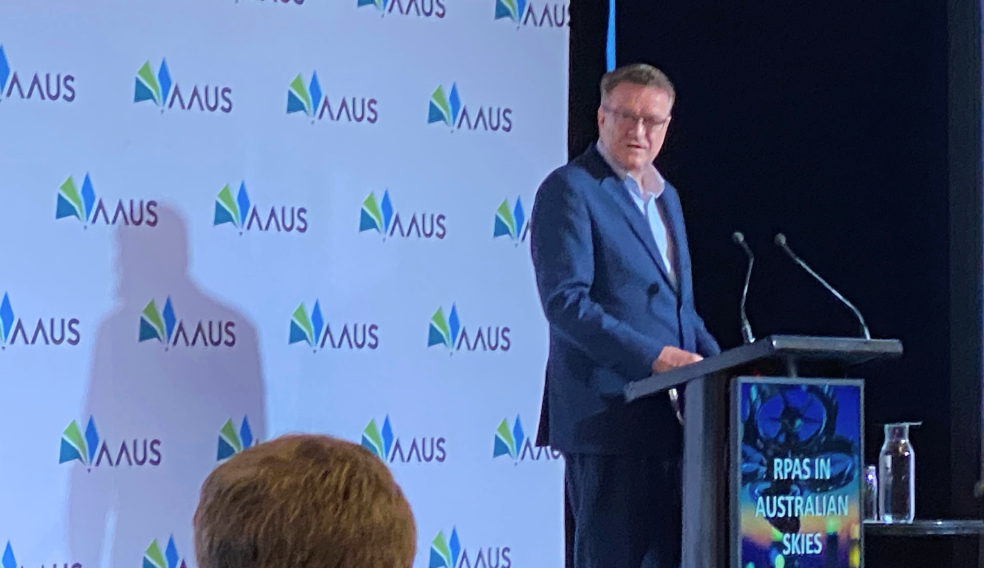
Keynotes speakers from CASA and Airservices Australia reinforced the critical importance of harmonising regulation, technology, and operational design for a sector that has outgrown the current regulatory architecture.
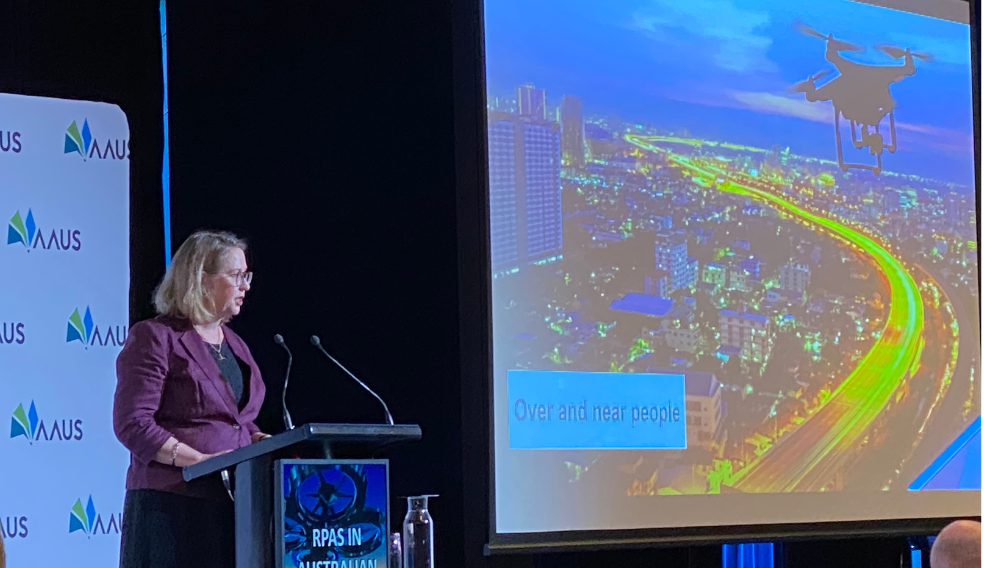
Pip Spence, CEO of CASA, highlighted the growth of Australia’s licensed RPAS (Remotely Piloted Aircraft Systems) workforce and outlined CASA’s focus on smarter, scalable regulation. This includes improved pathways for operations over or near people, the evolving Australian specific operation risk assessment (AusSORA) framework, and initiatives to streamline Beyond Visual Line of Sight (BVLOS) approvals to better match the pace with industry innovation.
Rob Sharp, CEO of Airservices Australia, reinforced the importance of harmonising policy, regulation, digital systems, and training to support safe integration of RPAS operations. Airservices also showcased the ongoing development of Flight Information Management Systems (FIMS), enabling near real time authorisations around controlled airports, and investment in broader digital infrastructure to shape a unified, future ready Uncrewed Traffic Management (UTM) ecosystem.
A consistent theme throughout the conference was the need for scalable, competency based training to match the sector’s rapid expansion. Key themes included:
- Developing a modular licensing framework with scalable endorsements (Night, EVLOS, BVLOS) to replace repetitive, inspector centric approvals.
- Reforming Remote Pilot Licence (RePL) and Remote Operator Certificate (ReOC) pathways to reduce friction, improve operator maturity recognition, and support routine low risk operations at scale.
- Building a future‑proof training pipeline, from foundational RePL through to integrated university pathways and youth engagement initiatives such as drone racing.
- Strengthening training quality to reinforce safety culture, industry credibility, and public trust, especially as RPAS operations expand into emergency services, infrastructure and advanced automation.
The conference also delivered two clear messages:
- The RPAS sector is scaling faster than traditional frameworks, requiring digital first, risk based and interoperable systems.
- Training is now a strategic national capability, demanding collaboration across policy, industry and education.
Australia is not just catching up to global RPAS trends, it is positioning itself to lead. The conference showcased profound innovation across several critical areas, including:
- Airspace Protection with counter drone systems are emerging as an essential enabler, protecting legitimate operators and bolstering public trust.
- Geo Awareness, including dynamic restriction zones, hazard intelligence and fused data layers, the backbone of autonomy.
- Digital Airspace Risk Modelling, with the Australian Digital Airspace Characterisation (ADAC) Project, demonstrating high resolution quantitative airspace modelling capable of evaluating encounter rates, probabilities and contextual risk across millions of datapoints.
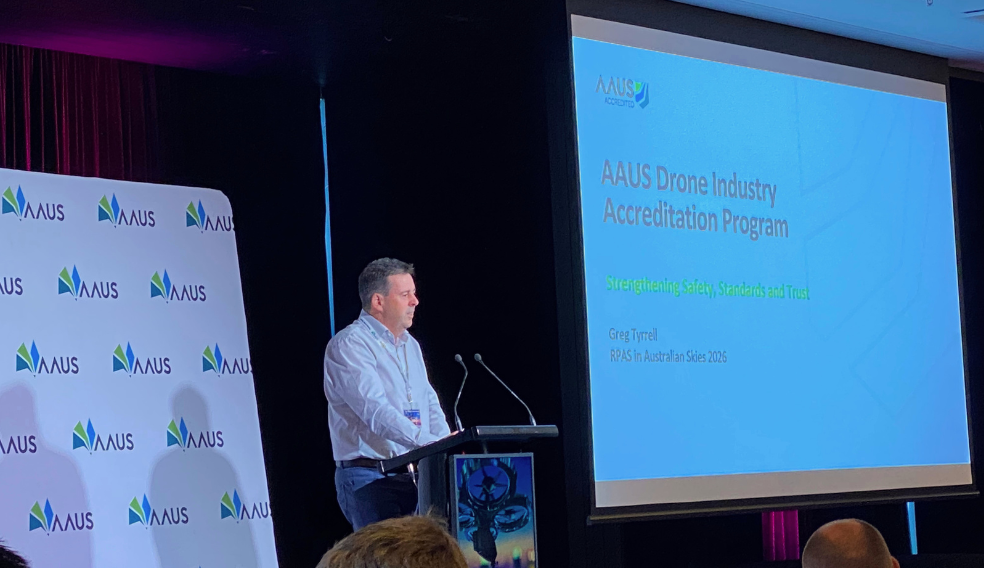
AAUS’s CEO Greg Tyrrell also announced the launch of the Drone Industry Accreditation Program which:
- Recognises trusted and professional operators by assessing governance maturity, safety systems, and operational discipline.
- Strengthens safety culture and builds confidence for end users, regulators and insurers.
- Supports industry growth opportunities by lifting the professional baseline and consistent national standards.
- Introduces a three-tier framework (Verified, Advanced, Leader) to acknowledge increasing levels of operational capability and organisational maturity.
The conference highlighted the importance of RPAS in Public Safety & Emergency Services. Surf Life Saving NSW, NSW Police, and Australian Uncrewed Aerial Vehicle Service (AUAVS) demonstrated what operational maturity in action, including:
- Up to 850 flights per day across Surf Life Saving NSW operations.
- Drone in a Box deployments enabling remote policing highlighted through Moree case study.
The 2026 RPAS in Australian Skies conference made one thing unmistakably clear:
Australia is ready. The technology is ready. The benefits are ready. But scaling safely, efficiently and nationally now depends on building a workforce and regulatory system designed for the future, not the past.
Industry Skills Australia is currently delivering a number of Advanced Air Mobility (AAM) and RPAS initiatives aimed at aligning vocational education and training with CASA regulation and building the skills required for next generation RPAS operations. Further detail is available in the Aviation Workforce Plan 2025.
The RPAS in Australian Skies 2026 conference highlighted a clear opportunity for Australia to lead in uncrewed aviation. While the technology and use cases are established, long term success will depend on aligning regulation, digital systems, and workforce capability. With continued collaboration across regulators, industry, and education, Australia can build a safe, scalable, and future ready RPAS ecosystem.