Australia’s maritime workforce faces significant delays in sea berth access to accumulate the qualifying sea time required for Australian Maritime Safety Authority (AMSA) certification. This constraint limits the supply of seafarers, slows progression into critical roles such as Deck Officers, Engineers and Masters, and affects workforce readiness across the broader ports and maritime ecosystem.
To address this, Industry Skills Australia (ISA) is undertaking a Simulation Feasibility Business Case and Trial to determine whether high quality, regulator-approved simulation can safely and effectively support the achievement of qualifying sea time and competencies mandated by AMSA. This work aligns with the Strategic Fleet Taskforce Recommendation 9, national maritime workforce goals, and international best practice.
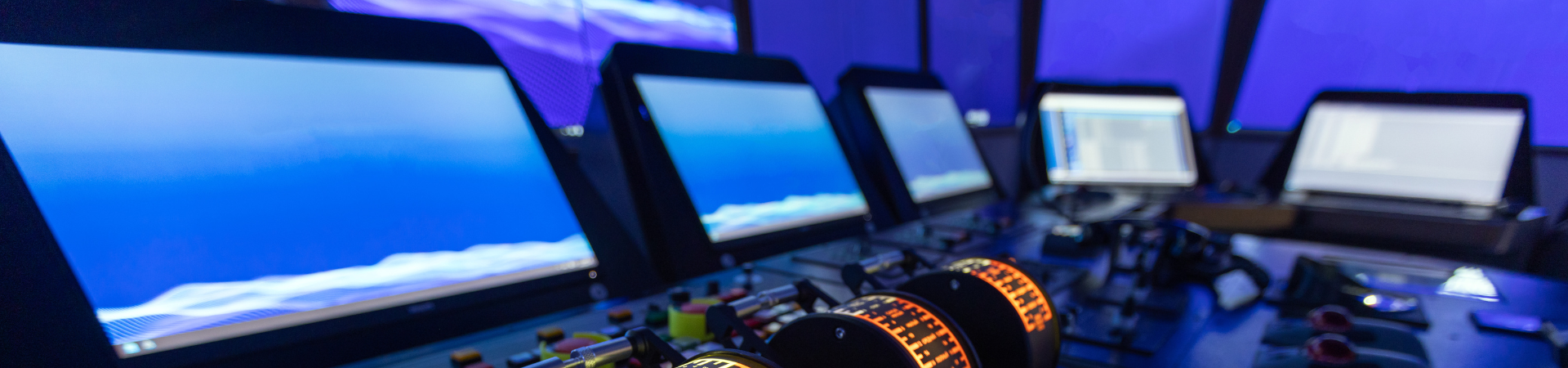
Simulation technology is used globally to build advanced seafaring skills, increase safety and reduce training bottlenecks. In Australia, simulation is already used for workforce training, but its potential to accelerate qualifying sea time remains unexplored.
Industry, RTOs and regulators have expressed strong interest in expanding the use of simulation, provided safety and compliance with AMSA and IMO standards are maintained.
This project will:
- Assess where simulation can safely replace or supplement physical sea time for high demand roles under STCW and Domestic Commercial Vessels (DCV).
- Improve training accessibility for regional, remote and equity cohorts.
- Aim to reduce reliance on limited sea berths and alleviate certification delays.
- Support a resilient, future ready maritime workforce trained to consistent national standards.
A carefully designed, regulator aligned trial will help determine how simulation can be integrated into maritime certification pathways in a safe, credible and evidence-based way.
This project aims to deliver:
Feasibility Assessment
- Identify where simulation can safely and effectively support AMSA qualifying sea time, informed by international benchmarking and competency analysis.
Trial Design
- Develop a regulator aligned simulation model through structured consultation with AMSA, RTOs, industry and training partners.
Pilot Trial (where feasible)
- Test real world simulation scenarios to evaluate safety, learner experience, efficiency and regulatory compliance for STCW and DCV applications.
Final Report & Presentation
- Provide evidence-based advice on the viability of simulation for certification, supported by a model suitable for consideration by regulators and industry.
The project will be fully completed by June 2027, following completion of feasibility, regulatory approvals, simulation trial implementation, and final reporting to DEWR.
 |
Mandi Mees Head of Maritime Skills Program M: 0448 814 442 | E: mandi.mees@isajsc.org.au |