May 19, 2026
Tackling Workforce Shortages Through Inclusive Employment
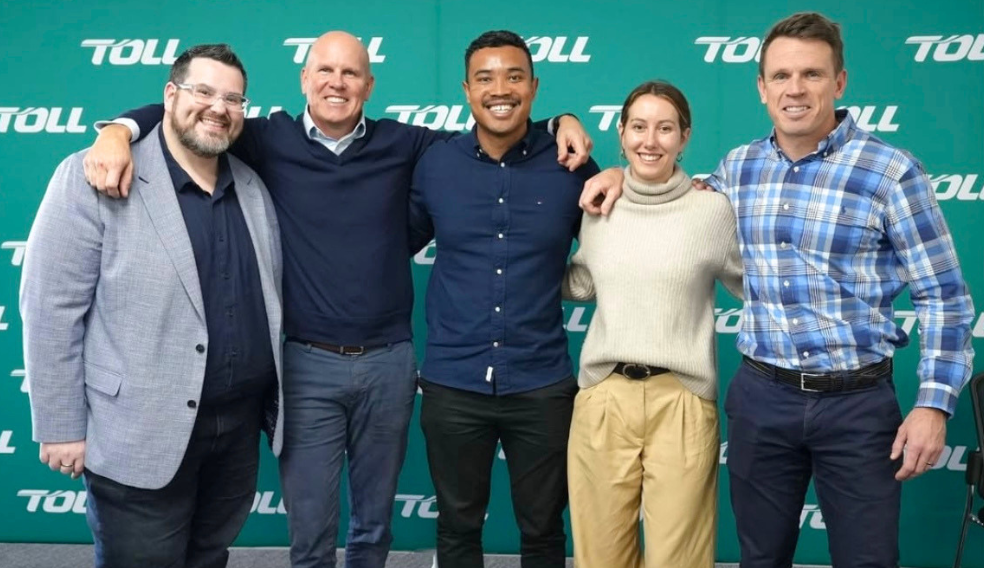
Australia’s transport and logistics sector continues to face acute workforce shortages, particularly in entry‑level operational roles that must be filled quickly and at scale. At the same time, a significant but underutilised labour pool exists among people experiencing and facing homelessness. Many are capable, motivated, and job‑ready, yet excluded from employment due to stigma and lack of access. As Noah Yang, CEO of We are Mobilise, observes, “One of the big insights was that people facing homelessness want to work. What would happen if we gave them those opportunities?”
We Are Mobilise is an Australian not‑for‑profit organisation established in 2016 that focuses on supporting people experiencing homelessness. The organisation works nationally, partnering with service providers to deliver direct financial assistance for housing, essential expenses, and short‑term support needs. Its approach centres on providing targeted funding alongside existing services, while also contributing to longer‑term initiatives such as employment pathways and access to stable housing.
In response, Toll Group and We Are Mobilise codesigned an inclusive employment pathway program that connects overlooked talent directly to logistics and warehousing jobs. The program is demand-led, operationally practical, and embedded in business-as-usual systems, demonstrating good practice in workforce development.
Toll Group placed its first two employees through the program in August 2025, with a further 30 scheduled by the end of the year and another 20 in the pipeline. These are not symbolic placements, but critical operational roles. As Michael Rugendyke, President - Resources and Industrials at Toll Group explains, “These are entry‑level roles. You don’t need to come with a skills background… we do the training, we do the upskilling, we do the buddying, all of those things to bring new entrants into the workplace.”
Program design
Key features of the program reflect recognised good practice in inclusive employment:
- Entry level roles with no prior skills requirement, removing unnecessary barriers
- Structured onboarding, buddying, and on-the-job training
- Clear progression pathways across a range of disciplines
- Full integration into existing business systems rather than customised arrangements
This design ensures the program addresses workforce shortages at scale, without creating additional complexity for employers.
Skills development and career progression
Participants enter roles at entry level and progress through structured capability building as their tenure and confidence grow. Importantly, visible career pathways drive high engagement and retention.
- Employer funded forklift licences
- For motivated and strong performers, progression is not limited to driver and supervisory roles
- Clear, credible advancement pathways aligned with business needs
“The entrants that are coming into the business are immediately thinking about ‘what's next’…’what's my next role? I want to be a supervisor. I want to be a forklift operator. How do I do it’?”, notes Rugendyke.
Impact beyond employment
Beyond workforce outcomes, stable and meaningful employment supports life changing impacts for participants, including housing security, income stability, and renewed purpose. Employment functions not merely as work, but as a foundation for broader social stability. Yang reflects, “When they have the stability of a home, that's already life changing to them….and now they've got stability of an income, a new group of mates as well as the ability for potential career progression.” This sentiment is echoed by participants, "A lot of my friends and people have asked me how I think of it and I always tell them it's a great environment, I love it there. And I always tell them that they should definitely look into joining Toll or the program and starting in warehousing."
Participants often describe their experience as unexpected and transformative, “They tell us it feels too good to be true… like they’ve won the lottery.” and “Because I was unemployed for a long time, I've been able to stand on my own two feet. That's a great feeling."
Organisational benefits
Beyond addressing workforce shortages, the program has delivered internal benefits for Toll Group:
- Strengthened organisational culture and employee pride
- Deepened the understanding of diversity and inclusion
- Demonstrated high levels of internal advocacy and peer support
- Enhanced the organisation’s reputation through grounded, tangible action.
“One of our people called it an honour to be employed by a business that is doing this sort of thing”, says Rugendyke. “Seeing people have pride in the business beyond just what we are creates another level of cultural strength that we didn't have prior.”
Breaking stigma, unlocking supply
A central insight emerging from the program is that homelessness is a circumstance and there is a need to separate circumstance from capability.
Rugendyke emphasises, “Take the word ‘homelessness’ away from the person’s name, and it is a very different decision,” and “Homelessness is a situation rather than a person.”
By shifting perspective, the program is opening pathways to a capable and motivated workforce that is otherwise overlooked.
Why this matters for industry
This model delivers practical solutions in direct response to industry pressures by:
- Rapidly mobilising workers for warehousing and logistics operations roles
- Expanding access to a recruitment pool that is untapped and overlooked
- Creating a workforce that is highly engaged, motivated by opportunity, and more likely to stay
As Rugendyke notes, “We have 300 new roles to fill for warehousing contracts in New South Wales and Brisbane alone,” and “They've been given an opportunity. Someone's believed in them; you see discretionary effort beyond what you would expect.”
Scalability
For mature organisations, this approach requires no new systems:
- Existing onboarding, security, and compliance processes apply
- Established training and inclusion frameworks are used
- Leadership belief and intent are the critical enablers
As Rugendyke confirms, “This is not complex for mature organisations. The systems already exist; it’s just a quick switch of the mind, and a brand-new world opens up.”