

At a time of record investment in rail networks, uncertainty in project timelines caused by construction delays and cost escalations adds further complexity to workforce planning. These challenges make career development, retention, and mobility more important than ever.
ISA is leading several projects aligned with the 2025 Rail Industry Workforce Plan. These projects are designed to address current and emerging workforce challenges, support career development and the strengthening the future of Australia’s rail sector.
ISA’s work includes the following key initiatives:
Mutual Recognition
One of the biggest barriers to workforce mobility is the lack of mutual recognition of skills across jurisdictions. Rail training and assessment are often highly contextualised to specific networks or organisations, meaning workers face retraining when changing employers, costing time and money for businesses.
To address this, the National Transport Commission (NTC) developed a Blueprint for mutual recognition of nationally recognised entry-level rail skills training, outlining five steps to streamline recognition and reduce duplication.
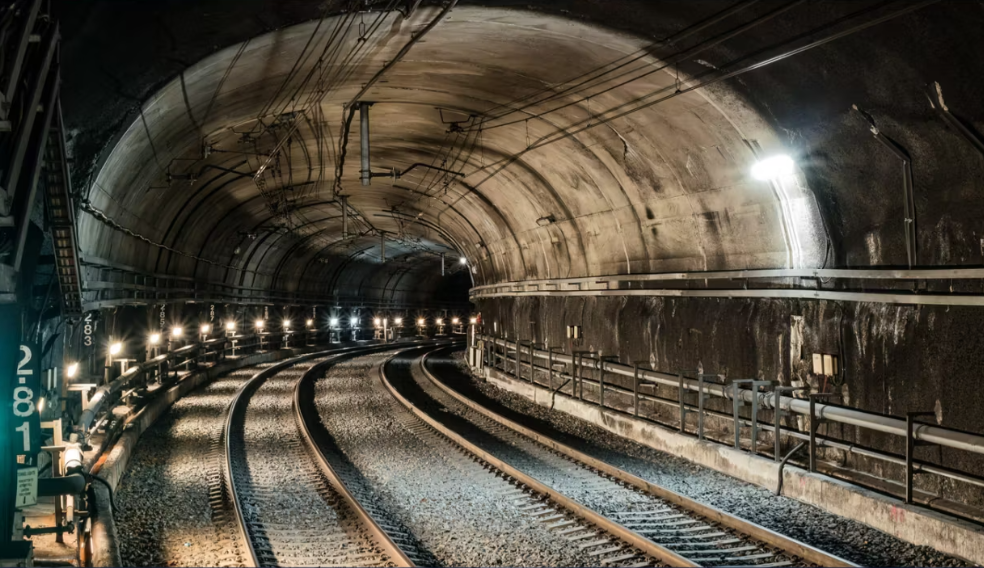
ISA’s ongoing work with the National Transport Commission on the National Rail Action Plan, includes the development of a Rail Mutual Recognition Framework to streamline entry-level rail skills training and reduce duplication. The aim is to co-ordinate efforts between government and industry to enhance efficiency, safety and interoperability of Australia’s rail systems.
Rail Career Information

This project will develop career information for job roles and career pathways in the Rail Industry to support attraction and retention of workers.
It will expand on previous work undertaken in the Seamless Future Rail Skills project and create resources to the Transport and Logistics Training Package. The information will be targeted at a broad range of stakeholders including job seekers, career guidance counsellors, schools, students, employment service providers, training providers, employers, industry peak bodies and other organisations associated with the Rail industries.
Autonomous Train Operations
This project will conduct a skills gap analysis to support the implementation of autonomous train operations. The insights generated will inform the review of existing training products and support the development of new, fit-for-purpose resources within the Transport and Logistics Training Package.
By identifying current and emerging skills requirements, this initiative will ensure the workforce is equipped to meet the demands of evolving rail technologies and operational models.
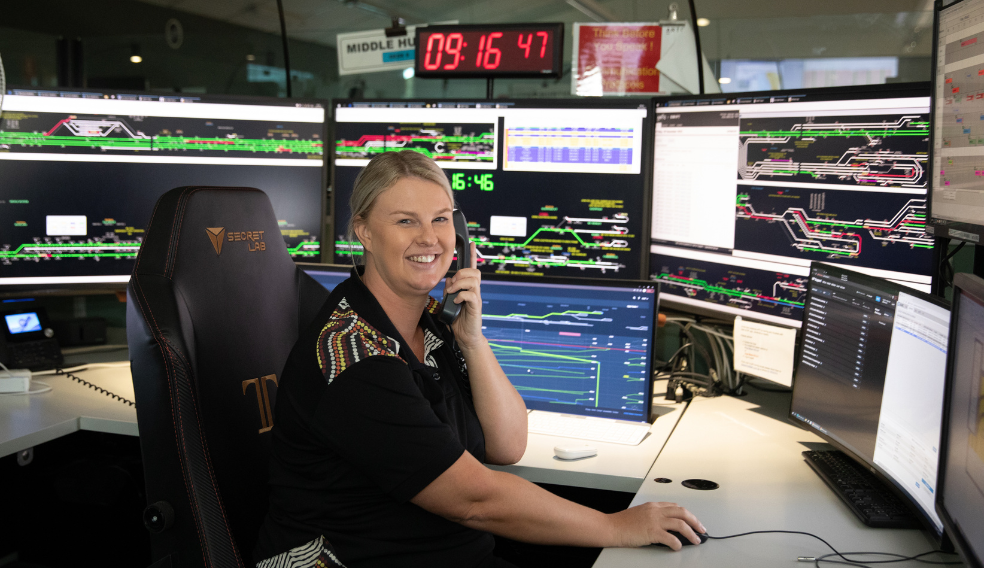
Celebrating Excellence and Workforce Development Achievements in the Rail industry
Highlights from the 2025 Rail Industry Awards
More than 600 rail professionals from across Australia and New Zealand gathered in Sydney to celebrate the 2025 Rail Industry Awards, an evening dedicated to recognising innovation, leadership, and impact across the sector. With 16 award categories, this year’s event set a new benchmark for excellence in rail.
Australasian Railway Association CEO Caroline Wilkie commended the calibre of entries “This year’s winners represent the very best in our industry, showcasing the depth of talent and commitment to progress across rail.”
John Holland took home the Employee Engagement Excellence Award for its groundbreaking initiative, Flex from the Start. Trialled across major Sydney infrastructure projects, the program introduces flexible work options, such as five-day weeks and nine-day fortnights to improve work-life balance and retention in the rail and construction sectors.
Led by Dr. Natalie Galea from the University of Melbourne and funded by the NSW Government, the initiative has reshaped workplace culture by enhancing mental health, challenging traditional norms, and fostering inclusivity. A dedicated Wellbeing Committee ensures its continued success and scalability.
At the heart of the initiative is Flex9, a broader strategy aimed at creating sustainable career pathways and making the rail industry more attractive to new talent. By embedding flexibility from day one, John Holland is addressing one of the sector’s biggest challenges: balancing the demands of large-scale projects with employee wellbeing.
Our Industry Engagement Manager for Rail, Carly Grigg, recently visited the Sydney Metro Southwest (Sydenham to Bankstown) project, one of the standout examples of workforce innovation in action. With around 300 workers on site daily, the project involves converting the T3 Bankstown Line to metro standards. The project’s complexity and scale emphasise the importance of attracting and retaining skilled talent.
“They’ve found a way to meet the industry’s demand for highly skilled workers while supporting career progression and employee wellbeing. John Holland’s integrated approach combining career development, flexible work, and strong project delivery, sets a new standard for workforce engagement in rail.” said Carly.
Another highlight of the evening was the Diversity and Inclusion Excellence Award, presented to the Southern Program Alliance - a collaboration between ACCIONA, WSP, Metro Trains Melbourne, and the Level Crossing Removal Project. Their impactful disability inclusion initiatives are creating meaningful employment pathways and driving real change in workplace diversity across the rail sector.
State Training Award Winners
Australia’s rail industry continues to demonstrate its commitment to workforce development, with several organisations and individuals recognised at recent State Training Awards for their outstanding contributions to vocational education and training (VET).
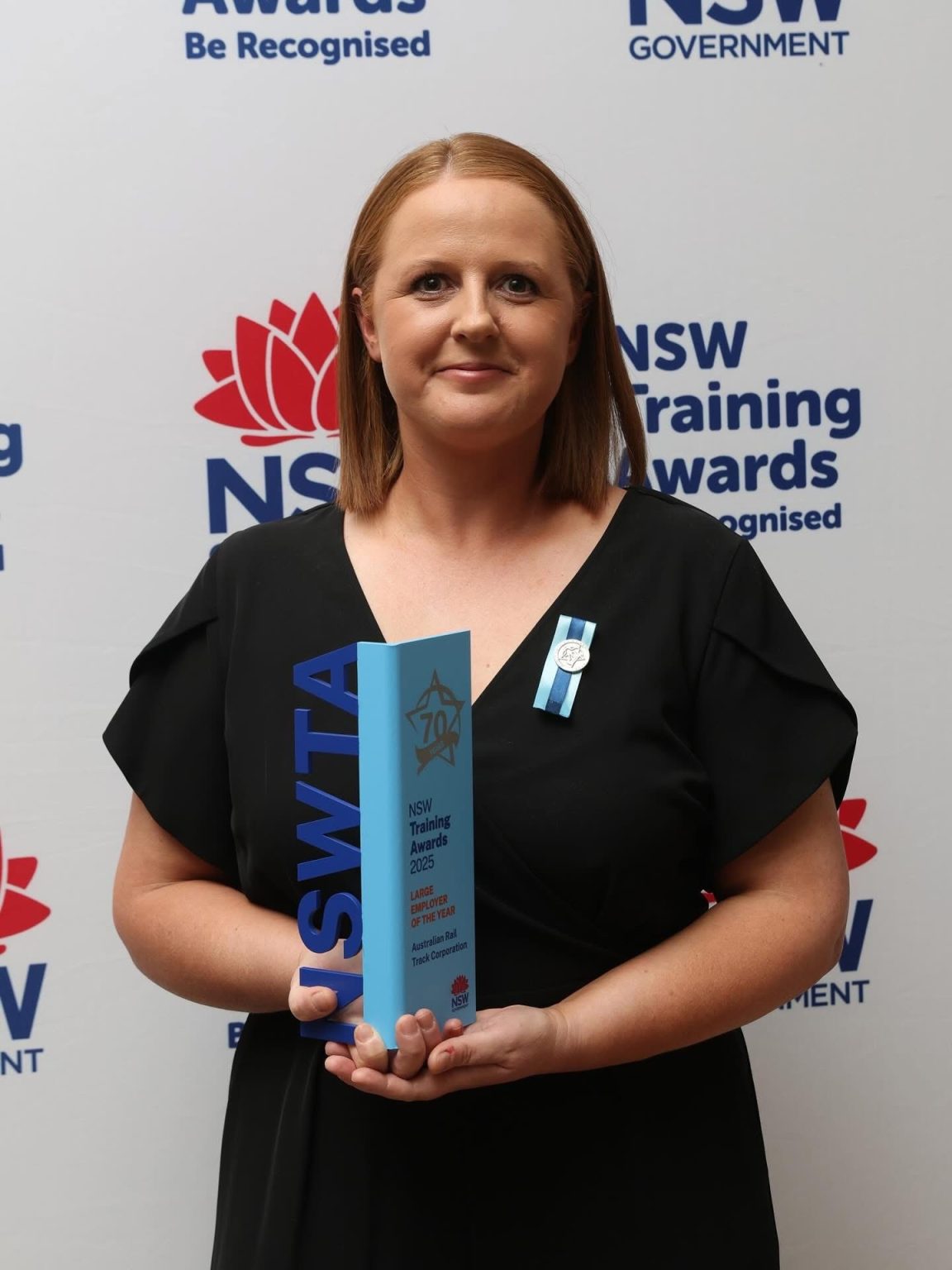
Large Employer of the Year - NSW
Australian Rail Track Corporation (ARTC)
ARTC was honoured for its robust training frameworks and commitment to upskilling its workforce. Managing over 9,600km of rail track across five states and more than 50 First Nations lands, ARTC supports safe and efficient freight and passenger movement nationwide.
Accepting the award in Sydney, Jenna Chandler, Manager National Training, said “We’ve built transparent and meaningful training frameworks that support more than 1,000 of our people. But our success really comes from everyone across ARTC who embraces learning, development and the pursuit of qualifications.”
Large Employer of the Year - Victoria
V/Line
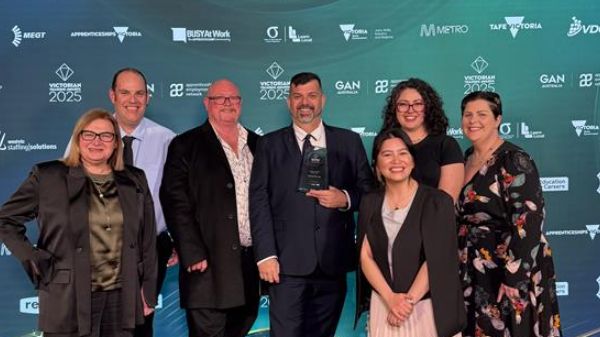
V/Line’s strategic investment in employee development earned it top honours at the Victorian Training Awards. Operating across a 3,500km network with over 2,300 rail and 1,520 coach services weekly, V/Line plays a vital role in regional mobility and employment.
Training is embedded at every level, with purpose-built environments featuring functioning signal systems and infrastructure. Its Registered Training Organisation delivers nationally recognised qualifications from Certificate II to Diploma level, with over 7% of staff actively engaged in 75 hours of training per month, driving measurable improvements in operational capability and public trust.